When Your Car Gets Stuck in a Basement: Why You Need a Basement Pullout Service
There is a moment that every driver in the UAE learns to dread. You park in a basement lot, maybe in a shopping centre or a residential tower, and when you come back you find the car will not move. Maybe the battery is dead. Maybe there is a mechanical fault. Maybe the exit ramp is too steep and the car will not climb it. In that moment, you realise a regular tow truck cannot reach you. The ceiling is too low. The ramp is too tight. You need a basement pullout service.
I have seen this happen more times than I can count. A driver calls for help, and the first recovery truck that arrives cannot fit into the basement. The driver waits longer. The building management gets involved. The car stays stuck. That is the moment when a specialised basement pullout service becomes the only real option. It is not just about having a winch. It is about having the right vehicle and the right technique to extract a car from a confined space without damaging anything.
What Makes Basement Pullout Different from a Standard Tow
Standard roadside assistance works fine when your car breaks down on an open road or in a surface car park. A flatbed tow truck reverses up, the car gets loaded, and off it goes. But a basement is a different environment. The height clearance is usually under 2.2 metres, sometimes as low as 1.8 metres. A standard tow truck cannot even enter. Even if it could, the turning radius inside a basement is often too tight for a full-size recovery vehicle.
That is where the carrecoverydubai Basement pullout service comes into its own. The team uses purpose-built recovery vehicles that are low-profile enough to drive into the basement. They carry equipment designed for low-clearance work: low-rise jacks, slim-profile dollies, and recovery straps that can be threaded around obstacles. The goal is to get the car out safely without scratching the paint or damaging the building structure.
Common Scenarios That Call for a Basement Pullout
Most people do not think about basement recovery until they need it. But there are a few situations that come up again and again in Dubai.
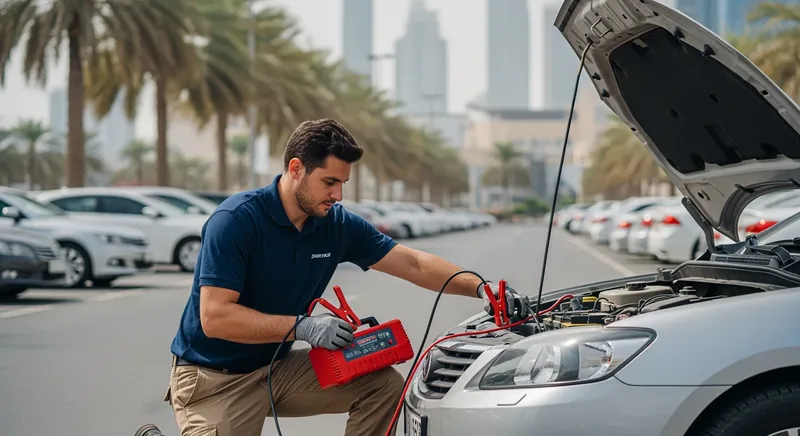
- Dead battery or electrical failure in a basement bay. The car will not start, and there is no way to push it up a ramp alone.
- Brake or transmission lock. Sometimes a car locks itself in park and cannot be shifted into neutral. That makes towing with a standard wheel-lift impossible.
- Flat tyre in a basement. Changing a tyre in a cramped space with low light is awkward enough, but if the jack will not fit or the car is too low, you need professional help.
- Accident inside the basement. Minor collisions happen in tight parking garages, and sometimes the car ends up wedged against a pillar or another vehicle.
- Mechanical breakdown on the ramp itself. If your car loses power halfway up the exit ramp, it can block the entire building exit until it is removed.
In every one of these cases, the solution involves more than just a standard tow. The recovery team has to assess the clearance, the angle of the ramp, and the weight distribution of the car. They also have to coordinate with building security and sometimes the civil defence if the car is blocking an emergency access route.
The Technical Side of a Basement Recovery
When I first started working in vehicle recovery, I thought a winch and a flatbed could solve almost anything. Then I got a call to a basement in JLT. A delivery van had broken down at the bottom of a spiral ramp. The ceiling height was exactly 2.0 metres. My truck could not get within 15 metres of the van. That was when I learned the value of a proper basement pullout service.
The technique usually works like this. The recovery vehicle parks at the top of the ramp or outside the basement entrance. A long recovery strap or cable is fed down the ramp to the stuck vehicle. The winch operator uses a series of pulleys and redirects to pull the car up the ramp without the recovery vehicle ever entering the basement. If the car cannot roll freely, the team uses low-profile skates or a towing dolly that slides under the stuck wheels. The whole operation requires careful communication between the winch operator and the person guiding the car up the ramp.
One of the hardest parts is managing the car's steering. When you pull a car that is not running, the steering wheel can turn on its own as the car moves. That can cause the front wheels to catch on curbs or pillars. A good operator walks alongside the car and keeps the steering straight. It sounds simple, but it is a skill that takes years to develop. The carrecoverydubai Basement pullout service has operators who have done this hundreds of times. They know how to read the space and adjust the pull angle on the fly.

What to Look for in a Basement Pullout Provider
Not every recovery company can handle basement jobs. Some will try, but they will bring the wrong equipment and waste your time. Here are a few things I have learned to check.
First, ask about vehicle height. The recovery truck they send must be low enough to enter the basement if needed. If they cannot drive in, they need a long enough winch cable and the right pulley system to pull from outside. Second, ask about experience with basement recoveries. A company that has done a hundred basement jobs will have seen the common problems: low ceilings, tight corners, slippery ramps, and uncooperative building security. Third, ask about insurance. If anything gets damaged during the pullout, you want to know who covers it. A professional basement pullout service carries liability insurance for both the vehicle and the property.
In Dubai, where many residential and commercial buildings have multi-level basements, this kind of service is not a luxury. It is a necessity. The carrecoverydubai Basement pullout service has built its reputation on being able to handle these tricky recoveries without drama. They show up, assess the situation quickly, and get the car out with minimal fuss.
Why You Should Not Try to Solve It Yourself
I have seen drivers try to push a car up a ramp with the help of friends. I have seen them tie a rope to the car and try to pull it with another vehicle. These attempts almost always end badly. The car can roll back and hit the wall. The rope can snap and cause injury. The building management might fine you for causing a disruption. Worse, if you damage the car's undercarriage or the building structure, you are looking at a repair bill that dwarfs the cost of a professional recovery.
There is also the risk of fire or electrical damage. If the car has a short circuit or a leaking battery, moving it the wrong way can make things worse. Professional recovery operators know how to isolate these risks. They carry fire extinguishers, gloves, and protective gear. They also know which cables to disconnect and which ones to leave alone.
Final Thoughts on Basement Pullout
If you park in a basement regularly, it is worth knowing that help is available even when a standard tow truck cannot reach you. A basement pullout service is not something you think about until you need it, but when you do, it makes all the difference. The peace of mind that comes from knowing a trained team can extract your car from a tight basement without damage is worth a lot.
Whether you drive a small hatchback or a large SUV, the same principles apply. The equipment has to fit the space. The operator has to know the technique. And the service has to be available when you need it, day or night. That is what a good basement pullout service delivers.